When Fire Sprinkler Systems Corrode: Why Microbiology Matters
By Judit Knisz, PhD
Published on: June 18, 2026
Updated on: June 19, 2026
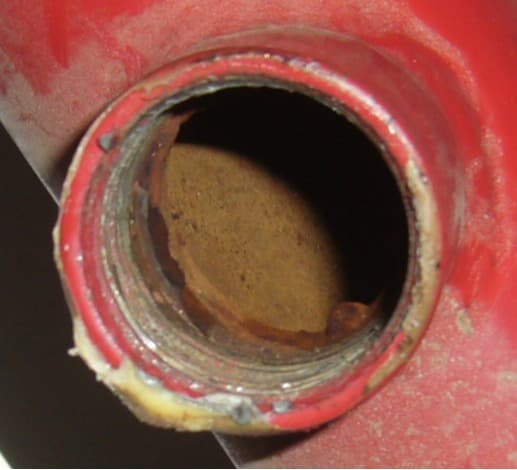
Fire sprinkler systems are designed to protect buildings, assets, and lives. Yet, like many water-based utility systems, they can face a hidden and often underestimated threat: microbiologically influenced corrosion, or MIC.
In fire protection systems, corrosion is not simply a maintenance issue. It can lead to pipe leakage, blockage of components, or plugging of valves, all of which may compromise system performance during a fire. The consequences can therefore be far more serious than a leaking pipe or a costly repair. They can affect the reliability of an essential safety system.
Why Fire Sprinkler Systems Are Vulnerable
Fire sprinkler systems have become increasingly affected by corrosion in recent decades. Older systems often used thicker-walled pipes and were opened less frequently, which generally reduced exposure to oxygen and other contaminants. Modern systems, however, are subject to regular inspections, testing, and maintenance procedures. While these activities are essential for safety compliance, they can also introduce oxygen and microorganisms into the system.
This combination matters because MIC is not caused by microorganisms alone. It develops through interactions between:
- water chemistry,
- oxygen availability,
- pipe materials,
- deposits and corrosion products,
- stagnant conditions,
- and microbial communities growing in biofilms.
In other words, MIC is best understood as a system-level problem, not just a microbiological problem.
Wet and Dry Systems: Different Names, Similar Corrosion Concerns
Fire sprinkler systems are commonly divided into wet pipe systems and dry pipe systems, including dry and preaction systems.
In wet pipe systems, the pipes are intended to remain filled with water until the system activates during a fire. Corrosion in these systems may be influenced by trapped air, corrosive water chemistry, and repeated introduction of oxygenated water during refilling or maintenance.
In dry pipe systems, the pipes are designed to remain empty until a fire event occurs. However, in practice, they may not remain completely dry. Residual water from hydrostatic testing or incomplete drainage can remain in low points or horizontal pipe sections. When this residual water is combined with oxygen, it can create ideal conditions for localized corrosion and, potentially, MIC.
This is one of the key challenges: a “dry” system is only protected from MIC if it is truly dry. If small pools of water remain, corrosion processes can still occur.
The Role of Oxygen, Water, and Stagnation
Fire sprinkler systems often remain stagnant for long periods. This stagnation allows deposits, corrosion products, and biofilms to develop on internal pipe surfaces. In such environments, microorganisms can create localized microenvironments that differ strongly from the surrounding bulk water.
Trapped air and oxygen gradients are especially important. Oxygen can drive abiotic corrosion, while microorganisms can further accelerate localized corrosion processes. The two mechanisms are often difficult to separate in practice, which is why MIC investigations should not focus only on microbes or only on chemistry. Both must be considered together.
Water Quality Matters — But “Potable” Does Not Always Mean “Corrosion-Safe”
Fire sprinkler systems are often filled with potable water. However, water that meets drinking water standards is not necessarily ideal from a corrosion perspective. Older drinking water networks may contain corrosion products or microorganisms such as iron- or manganese-oxidizing bacteria, which can contribute to deposit formation and biofilm development.
It may be worthwhile to test water before it is introduced into a sprinkler system and, where necessary, apply appropriate pre-treatment. This is particularly relevant because impurities can enter sprinkler systems not only through fill water, but also through installation and maintenance activities. Dirt, debris, oils, pipe joint compounds, corrosion products from upstream piping, and microbial growth in water tanks may all contribute to MIC risk.
Can Nitrogen Help?
One mitigation strategy increasingly discussed in fire sprinkler systems is the use of nitrogen supervision or inertion. For dry systems, nitrogen can help reduce oxygen-driven corrosion where residual water cannot be fully avoided. This approach has been implemented in some standards as a corrosion prevention strategy for dry fire sprinkler systems.
Nitrogen has also been studied in wet systems and shown to reduce corrosion under certain conditions. However, long-term data for wet systems under nitrogen supervision remain limited. Importantly, nitrogen is not a universal cure. If tubercles and deposits have already formed and anaerobic MIC is active underneath them, nitrogen may not stop the ongoing localized processes. In such cases, pipe replacement or mechanical cleaning may be necessary.
Chemicals and Material Replacement: Useful, But Not Simple
Chemical treatments such as corrosion inhibitors or biocides are sometimes considered for MIC control, but their use in fire sprinkler systems is not widespread. One reason is that stagnant systems may not allow chemicals to mix evenly. Another is that toxic or chemically treated water may create additional disposal costs.
If chemicals are used, they must be approved for fire sprinkler systems and applied according to relevant standards.
In severe cases, asset owners may consider replacing carbon steel or hot-dip galvanized pipes with other materials such as stainless steel, copper, or plastic. However, this can be costly, and alternative materials are not automatically immune to corrosion or deterioration. Many materials used in water utility systems may be susceptible to MIC under suitable conditions.
Why Monitoring Needs to Match the Problem
MIC damage is often highly localized. This means that some standard inspection or monitoring approaches may miss the most critical areas. For example, ultrasonic measurements may not always provide reliable insight if corrosion is concentrated in small pits or under deposits.
Monitoring should therefore be designed with the localized nature of MIC in mind. A meaningful assessment should combine multiple types of information, including:
- system history,
- water chemistry,
- microbiology,
- pipe materials,
- deposits,
- corrosion products,
- and corrosion morphology.
MIC cannot be confirmed or excluded by one test alone. The presence of microorganisms does not automatically prove MIC, and their absence in a sample does not necessarily rule it out.
Practical Lessons for Fire Sprinkler System Owners and Operators
Based on current understanding, several practical lessons stand out.
1. Avoid residual water in dry systems whenever possible.
If water remains after pressure testing or drainage, corrosion risk increases.
2. Control oxygen exposure.
Trapped air, refilling, and repeated maintenance events can introduce oxygen and contribute to localized corrosion.
3. Pay attention to fill water quality.
Potable water may still contain microorganisms, corrosion products, or chemistry that is unfavorable from a corrosion perspective.
4. Prevent contamination during installation and maintenance.
Dirt, oils, debris, pipe joint compounds, and upstream corrosion products can support microbial growth or deposit formation.
5. Use mitigation strategies before severe damage develops.
Nitrogen supervision, air venting, water quality control, and monitoring may help, but they are most effective when applied proactively.
6. Do not rely on a single diagnostic method.
MIC assessment should combine microbiological, chemical, operational, and material evidence.
Conclusion: Fire Safety Also Depends on Corrosion Awareness
Fire sprinkler systems are safety-critical infrastructures. Their reliability depends not only on correct hydraulic design and inspection schedules, but also on understanding the internal environment of the piping system.
MIC in sprinkler systems is shaped by a combination of design, installation, water quality, maintenance, oxygen exposure, stagnation, and material interactions. Because the damage is often localized and difficult to detect early, prevention and informed monitoring are essential.
For building owners, facility managers, insurers, and fire protection specialists, the key message is clear: corrosion control is part of fire protection reliability. Recognizing MIC as a system-level risk can help prevent avoidable failures and extend the service life of fire sprinkler infrastructure.
How BIOCORIX Can Help
At BIOCORIX, we help companies better understand and manage biofilm-related problems and microbiologically influenced corrosion in industrial and water-related systems.
In fire sprinkler systems, the challenge is often not only to detect corrosion, but to understand why it occurs, where the most vulnerable locations are, and which factors are contributing to the problem. This requires more than a single water sample or a single microbiological test. A meaningful assessment should combine information on system design, operation, water chemistry, microbiology, materials, deposits, and corrosion morphology.
BIOCORIX supports clients by helping them identify hidden microbial corrosion threats, plan targeted sampling and diagnostic strategies, interpret complex results, and make better-informed decisions about monitoring, mitigation, and prevention.
The aim is simple: to help asset owners, operators, and technical teams move from reactive repairs toward more proactive and evidence-based corrosion management.
References
Anette A. Rasmussen, Judit Knisz, Gregor J. G. Gluth, Bo Højris, Elsemiek Croese, Marina Vuković, Torben L. Skovhus, 2026. Microbiologically influenced corrosion of materials in water utility systems – a review on the state-of-the-art knowledge and knowledge gaps. AQUA - Water Infrastructure, Ecosystems and Society.
AMPP TR21544, 2022. Corrosion and Mitigation Techniques for Fire Protection Piping Systems.
NFPA 25, 2023. Standard for the Inspection, Testing, and Maintenance of Water-Based Fire Protection Systems.
NFPA 13, 2025. Standard for the Installation of Sprinkler Systems.
Pope, D.H. and Pope, R.M., 2000. Microbiologically influenced corrosion in fire protection sprinkler systems. NACE Corrosion, paper 00401.
Su, P. and Fuller, D.B., 2014. Corrosion and Corrosion Mitigation in Fire Protection Systems.
Su, P. and Swinnerton, B., 2018. Corrosion of Fire Sprinkler Piping in Untreated Pond Water under Nitrogen Purging